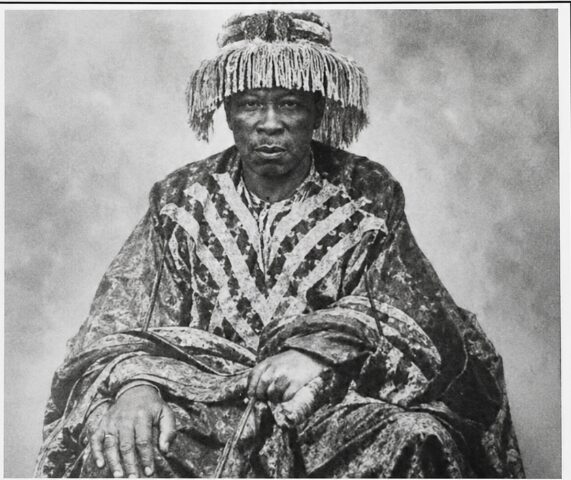
Igwe Orizu I (Eze Ugbonyamba)

Igwe Orizu I (Eze Ugbonyamba)

Igwe Orizu I (Eze Ugbonyamba) was the 18th Obi of Otolo and the Igwe of Nnewi Kingdom. Born in 1881, he ascended the throne in 1904 following the death of his father, Igwe Iwuchukwu (Eze Ifekaibeya). His reign lasted from 1904 to 1924 and coincided with one of the most transformative periods in the history of Nnewi—the arrival of British colonial administration, the gradual introduction of Christianity, and the transition from a predominantly traditional society into the modern era.

He is remembered as a courageous traditional ruler, a respected warrior king, an influential custodian of Nnewi customs, and the father of one of Nigeria’s most distinguished statesmen, Prince Nwafor Orizu, who later became President of the Nigerian Senate and Acting President of Nigeria.

Birth and Royal Lineage

Igwe Orizu I was born in 1881 into the prestigious House of Nnofo, one of the most prominent royal lineages in Nnewi. He was the eldest son of Igwe Iwuchukwu (Eze Ifekaibeya), the 17th Obi of Otolo and King of Nnewi.

His birth was regarded as a blessing and a good omen for the kingdom at a time when infant mortality, warfare, disease, and social instability were common throughout Igboland.

Growing up in the royal household, the young prince was exposed to the traditions, customs, diplomacy, and governance structures that formed the foundation of Nnewi society. These experiences would later shape his leadership style as king.

Ascension to the Throne

Following the death of his father in 1904, Orizu ascended the throne as the 18th Obi of Otolo and Igwe of Nnewi at approximately twenty-three years of age.

His ascension occurred during a period of immense political uncertainty as British colonial forces expanded their influence across Igboland. Despite his youth, he quickly emerged as a symbol of continuity and stability for the Nnewi Kingdom.

The Arrival of the British and the Young King

One of the defining events of Igwe Orizu I’s life occurred in 1904, the same year he became king.

British colonial forces led by Major Harry Moorhouse, accompanied by Hugh Trenchard, entered Nnewi as part of Britain’s efforts to establish colonial control over the region.

Fearing that the newly crowned monarch might be harmed or deposed, Nnewi elders concealed the young king from the British delegation. Responsibility for receiving the visitors fell upon his influential uncle, Nwosu Odumegwu (Eze Odumegwu), one of the wealthiest and most powerful men in Nnewi.

When British officials mistakenly assumed that Nwosu Odumegwu was the king, he informed them that the Igwe was observing traditional mourning rites and therefore could not receive visitors.

Recognizing his wealth and influence, the British attempted to appoint Nwosu Odumegwu as the Warrant Chief of Nnewi. To their surprise, he firmly rejected the offer, insisting that only the rightful heir could occupy the throne of Nnewi.

After receiving assurances that the young monarch would not be harmed, Nwosu Odumegwu and other elders arranged a public meeting between Igwe Orizu I and the British authorities at Nkwo Nnewi Market Square.

The meeting marked the formal recognition of the young king by the colonial administration and ushered Nnewi into a new political era.

Hugh Trenchard and the Disarmament of Nnewi

The arrival of British authority in Nnewi was closely linked to the military campaigns of Hugh Trenchard, who would later become the founder of the Royal Air Force.

Many communities initially resisted colonial authority and refused to surrender their weapons. Under the supervision of political officer R. M. Heron, houses belonging to those suspected of harbouring weapons were destroyed.

As a result, firearms and traditional weapons were surrendered at Nkwo Nnewi and publicly destroyed by British troops.

The people of Nnewi nicknamed Hugh Trenchard “Nwangwele” (Young Lizard) because of his appearance.

This period marked the end of an era characterized by frequent warfare and the beginning of direct colonial administration.

Reign as Igwe of Nnewi (1904–1924)
Igwe Orizu I (Eze Ugbonyamba)

During his twenty-year reign, Nnewi continued to expand its influence and prosperity.

The kingdom benefited from territorial gains secured through earlier conflicts with neighbouring communities, particularly around the Ichi axis. Igwe Orizu I also rewarded loyal warriors by resettling them in strategic settlements including:

  • Abubo
  • Nnewi-Ichi
  • Akabukwu

These settlements helped consolidate Nnewi territory and strengthen the kingdom’s influence.

His reign was characterized by political stability, economic growth, and the preservation of traditional institutions during a period of rapid change.

Christianity and Social Transformation

The reign of Igwe Orizu I witnessed the earliest significant introduction of Christianity into Nnewi.

Although he remained a custodian of traditional religion and customs, many members of the royal family and the wider population gradually embraced Christianity during and after his reign.

Despite these developments, he remained committed to preserving Nnewi customs, traditions, and indigenous institutions while allowing his people to adapt to changing realities.

The Ozo Title and Eze Ugbonyamba

Like many distinguished rulers of his era, Igwe Orizu I took the prestigious Nri Ozo title, one of the highest honours in traditional Igbo society.

Upon initiation, he assumed the revered Ozo title name:

Eze Ugbonyamba

This title reflected his elevated status, authority, wisdom, and spiritual significance within Nnewi and the wider Igbo world.

Today, he is remembered primarily by this title.

Family Life

Igwe Orizu I was renowned for the size and influence of his household.

Historical records indicate that he married approximately one hundred wives, among whom were:

  • Uzoagbala (mother of Josiah Orizu)
  • Ejeagwu
  • Mgbugo
  • Uzumma
  • Nwabudu
  • Afuekwe
  • Esomeju
  • Amini
  • Anyaku
  • Oyilidiya
  • Olieukwu
  • Onyeanu
  • Odife
  • Oliemma
  • Akuzulumba
  • Ogbeanu
  • Ojinukanu
  • Alozo

Among these wives, Mgbugo was particularly remembered for her beauty, dignity, and influence within the royal household.

Distinguished Descendants

The legacy of Igwe Orizu I extends far beyond his reign.

He was the father of:

Prince Abyssinia Nwafor Orizu

A distinguished Nigerian statesman who served as:

  • President of the Nigerian Senate
  • Acting President of Nigeria

He was also the grandfather of:

Igwe Kenneth Onyeneke Orizu III

The current traditional ruler of Nnewi, who ascended the throne in 1963 and is one of the longest-serving monarchs in Nigeria.

The First Car in Onitsha Province

One of the most remarkable stories associated with Igwe Orizu I concerns the arrival of the first motor vehicle in the region.

Shortly before his death in 1924, a pleasure car was purchased for him from Lagos.

The European Provincial Officer stationed in Onitsha was invited to inspect the vehicle and celebrate the occasion with the king.

After inspecting the automobile, it was registered as:

ON 1 (Onitsha 1)

The registration signified that it was the first registered motor vehicle in the entire Onitsha Province and, according to many accounts, possibly the first automobile in Eastern Nigeria.

The event became a symbol of Nnewi’s long-standing reputation for innovation, enterprise, and modernity.

Death and Legacy

Igwe Orizu I (Eze Ugbonyamba) died in 1924 after a distinguished twenty-year reign and was buried in Otolo, Nnewi.

He left behind a kingdom that had successfully navigated the transition from the pre-colonial era into the colonial period.

Today, he is remembered as:

  • The young king who met the British at a defining moment in Nnewi history.
  • A respected custodian of Nnewi traditions.
  • A ruler who guided his people through profound political change.
  • The father of one of Nigeria’s foremost statesmen.
  • The patriarch of the Orizu Royal Dynasty.

His reign remains one of the most significant chapters in the history of the Nnewi Kingdom and continues to occupy a prominent place in the collective memory of Nnewi people.

Views: 0

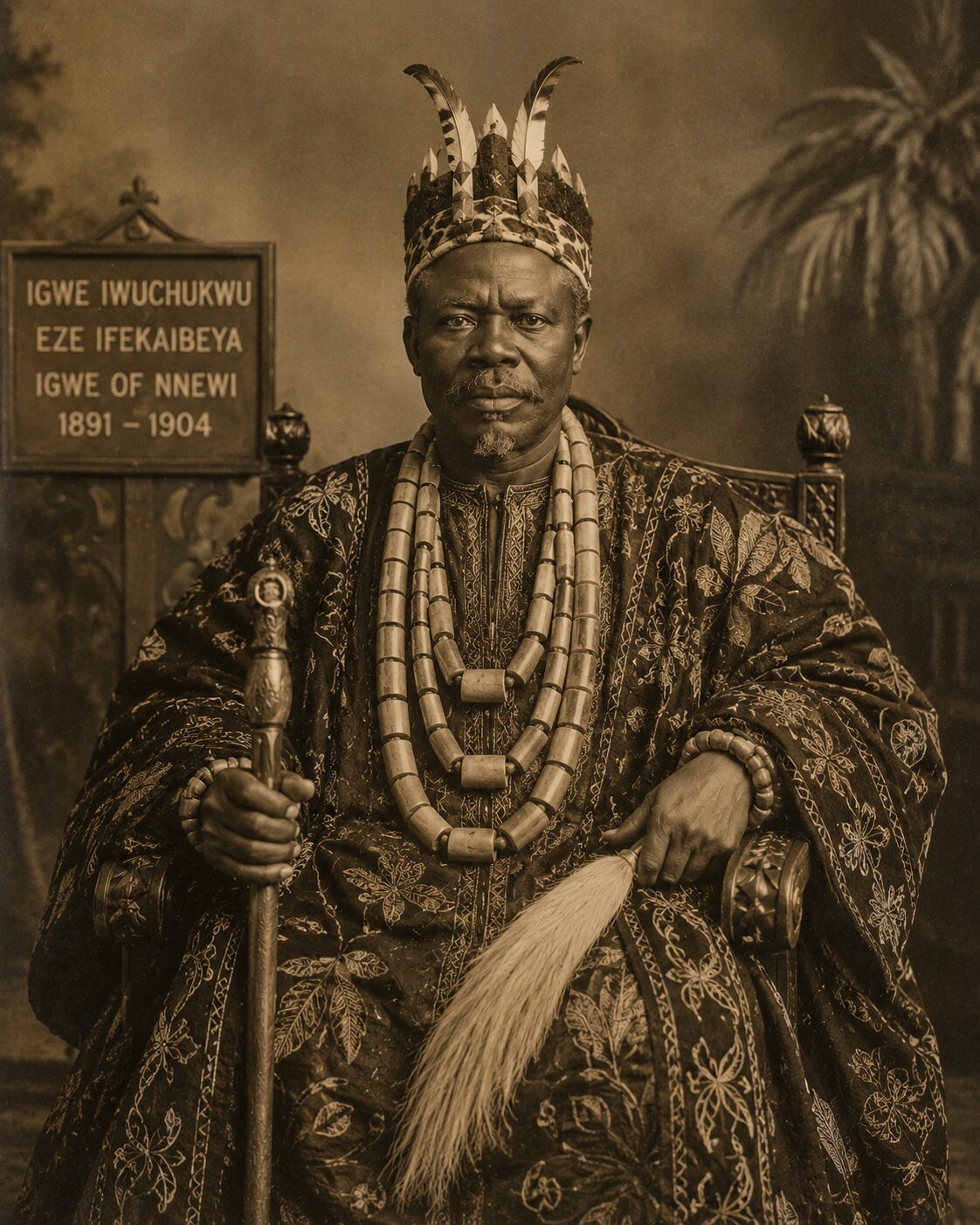
Igwe Iwuchukwu Eze ifekaibeya

Igwe Iwuchukwu Ezeifekaibeya (1855–1904) was the 17th Obi of Otolo and the traditional ruler of the Nnewi Kingdom in present-day Anambra State, Nigeria. As the supreme political, judicial, military, and spiritual leader of Nnewi, he occupied one of the most respected traditional institutions in Igboland.

A member of the prestigious Nnofo Royal Lineage, he succeeded his father, Igwe Okafo, and continued the ancient monarchy of Nnewi at a time when the kingdom remained one of the most powerful and organized states in the Eastern Niger region.

Unlike many Igbo communities that adopted centralized kingship structures during the colonial era, Nnewi had maintained an established royal institution for centuries before the arrival of Europeans. Igwe Iwuchukwu therefore inherited a throne whose authority was deeply rooted in tradition, ancestry, military success, and religious legitimacy.

His reign witnessed territorial expansion, military campaigns, commercial growth, and the final years of Nnewi’s independence before the arrival of British colonial rule.

Early Life and Ascension

Born in 1855, Iwuchukwu was raised within the royal household of Nnewi and was groomed from childhood in the customs, traditions, and governance structures of the kingdom.

As the son of Igwe Okafo, he acquired extensive knowledge of diplomacy, warfare, customary law, and religious observances associated with the monarchy. These experiences prepared him for leadership and positioned him as the rightful heir to the throne.

Upon the death of his father, he ascended the throne in 1891 as the 17th Obi of Otolo and Igwe of Nnewi.

Reign and Expansion of the Kingdom

The reign of Igwe Iwuchukwu Ezeifekaibeya was characterized by military strength, territorial consolidation, and the preservation of Nnewi’s influence among neighbouring communities.

At the time, warfare remained a significant feature of inter-community relations throughout Igboland. Nnewi’s military successes contributed to the expansion of its territory and influence, while trade networks linked the kingdom to major commercial centres throughout the region.

Historical records indicate that Nnewi maintained commercial relations with the Aro Confederacy, whose extensive trading network connected many parts of southeastern Nigeria.

His reign saw Nnewi continue to prosper through commerce, agriculture, and military victories, reinforcing its reputation as one of the strongest kingdoms in the region.

The Ubaru War

One of the most notable military events during the reign of Igwe Iwuchukwu was the famous Ubaru War.

According to oral tradition, the Otolo warriors were led by Nsoedo, a distinguished warrior from Umu Enem, who marched ahead carrying a sacred and charmed gourd believed to possess spiritual powers.

The Enem warriors assembled at the palace (Obi) of Eze Ifekaibeya, where they were joined by Nnofo troops and other Otolo warriors. Under the leadership of Nsoedo, the combined force advanced towards Ubaru territory.

Upon reaching the battlefield, they discovered that the enemy’s defensive positions were exceptionally strong and difficult to penetrate. At this critical moment, Nsoedo reportedly invoked the spiritual powers associated with the sacred gourd and called upon the ancestral deities of Umu Enem.

Inspired by this spiritual intervention, the Otolo forces launched a successful assault, broke through the enemy lines, and decisively defeated the Ubaru forces.

Although the victory was overwhelming, the campaign was not without losses. Among those who fell in battle was Obi Mmaduabum, a respected relative of Dala Oliaku.

The victory became one of the most celebrated military achievements in the history of Otolo Nnewi.

Heroes of the Ubaru War

The conclusion of the Ubaru War brought honour and distinction to the warriors who participated in the campaign.

Many of them received heroic titles commemorating their bravery and accomplishments. Among them were:

Eze Obiukwu of Udude, who became known as Ogbujulukpa.

Nsoedo, the sacred gourd bearer from Umu Enem, who became known as Ochibilogbuo.

Unaegbu of Egbu Umu Enem, who became known as Ogbuotaba.

Eze Udenyi, a relative of Eze Odumegwu, who received the title Kwambakwaisi.

The renowned warrior Eze Onyejemeni, whose successes in the Ubaru War and other campaigns enhanced his reputation, subsequently assumed the distinguished title Onuo Ora.

To commemorate the glorious victory, a large ceremonial rattle was prepared and permanently kept at the Obi of Eze Ifekaibeya as a symbol of triumph and military prestige.

The Coming of the British

The final year of Igwe Iwuchukwu’s reign coincided with one of the most significant turning points in Nnewi history.

In 1904, the same year that the king passed away, British colonial forces under Major Harry Moorhouse entered Nnewi as part of Britain’s expansion into the Igbo hinterland.

At the time, the kingdom was mourning the death of Igwe Iwuchukwu.

Because the heir to the throne, the young Prince Orizu (later Igwe Orizu I, Eze Ugbonyamba), was observing traditional mourning rites, he could not immediately appear before the British authorities.

Consequently, one of the most influential men in Nnewi, Chief Nwosu Odumegwu (Eze Odumegwu), a brother of the late king and one of the wealthiest men in the kingdom, received the British delegation.

Recognizing his influence and authority, the British administration attempted to appoint him as the Warrant Chief of Nnewi.

Chief Nwosu Odumegwu firmly rejected the offer.

His refusal was based on a fundamental principle of Nnewi custom: no individual other than the legitimate heir could assume the authority of the Igwe. Accepting such an appointment would have violated sacred traditions governing succession to the throne.

His decision demonstrated the deep respect Nnewi society had for its royal institution and ensured the continuation of the hereditary monarchy.

Family

Igwe Iwuchukwu Ezeifekaibeya maintained a large royal household consistent with the customs of the era.

His wives included:

Mgbafo Ezekwenna

Uduagu

Nwakaku Onwusilikam

Afiazu

Nonu

Mmegha

Ukonnwa

Among his children were:

Eze Ugbonyamba (Igwe Orizu I) – his first son and successor.

Eze Nnaweigbo, son of Mmegha.

Eze Enefeanya (Oji).

Ofodile, who shared the same mother as Eze Ugbonyamba.

Through these descendants, the royal lineage continued to shape the history of Nnewi throughout the twentieth century and beyond.

Death and Succession

Igwe Iwuchukwu Ezeifekaibeya died in 1904 after thirteen years on the throne.

His passing marked the end of an era and occurred at a pivotal moment when British colonial authority was beginning to establish itself throughout the region.

He was succeeded by his eldest son, Igwe Orizu I (Eze Ugbonyamba), who became the 18th Igwe of Nnewi at the age of twenty-three.

Legacy

Igwe Iwuchukwu Ezeifekaibeya is remembered as one of the important rulers of pre-colonial Nnewi. His reign represented the final phase of Nnewi’s sovereignty before direct British intervention.

His achievements include:

Preserving the authority of the Nnewi monarchy.

Expanding the influence of the kingdom through military campaigns.

Strengthening trade and regional relations.

Overseeing notable victories such as the Ubaru War.

Maintaining the traditions and customs of the Nnewi people.

Ensuring a smooth dynastic transition to his son, Igwe Orizu I.

His legacy survives through the continued prominence of the Orizu Royal Dynasty, which remains the ruling royal house of Nnewi today.

Notably, he was the grandfather of Prince Abyssinia Akweke Nwafor Orizu, Nigeria’s second Senate President and Acting President, and the great-grandfather of Igwe Kenneth Onyeneke Orizu III, the present traditional ruler of Nnewi.

Views: 1