
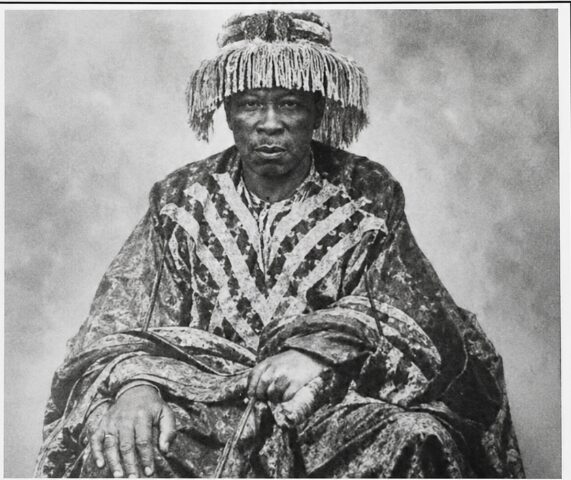
Igwe Orizu I (Eze Ugbonyamba)
Igwe Orizu I (Eze Ugbonyamba) was the 18th Obi of Otolo and the Igwe of Nnewi Kingdom. Born in 1881, he ascended the throne in 1904 following the death of his father, Igwe Iwuchukwu (Eze Ifekaibeya). His reign lasted from 1904 to 1924 and coincided with one of the most transformative periods in the history of Nnewi—the arrival of British colonial administration, the gradual introduction of Christianity, and the transition from a predominantly traditional society into the modern era.
He is remembered as a courageous traditional ruler, a respected warrior king, an influential custodian of Nnewi customs, and the father of one of Nigeria’s most distinguished statesmen, Prince Nwafor Orizu, who later became President of the Nigerian Senate and Acting President of Nigeria.
Birth and Royal Lineage
Igwe Orizu I was born in 1881 into the prestigious House of Nnofo, one of the most prominent royal lineages in Nnewi. He was the eldest son of Igwe Iwuchukwu (Eze Ifekaibeya), the 17th Obi of Otolo and King of Nnewi.
His birth was regarded as a blessing and a good omen for the kingdom at a time when infant mortality, warfare, disease, and social instability were common throughout Igboland.
Growing up in the royal household, the young prince was exposed to the traditions, customs, diplomacy, and governance structures that formed the foundation of Nnewi society. These experiences would later shape his leadership style as king.
Ascension to the Throne
Following the death of his father in 1904, Orizu ascended the throne as the 18th Obi of Otolo and Igwe of Nnewi at approximately twenty-three years of age.
His ascension occurred during a period of immense political uncertainty as British colonial forces expanded their influence across Igboland. Despite his youth, he quickly emerged as a symbol of continuity and stability for the Nnewi Kingdom.
The Arrival of the British and the Young King
One of the defining events of Igwe Orizu I’s life occurred in 1904, the same year he became king.
British colonial forces led by Major Harry Moorhouse, accompanied by Hugh Trenchard, entered Nnewi as part of Britain’s efforts to establish colonial control over the region.
Fearing that the newly crowned monarch might be harmed or deposed, Nnewi elders concealed the young king from the British delegation. Responsibility for receiving the visitors fell upon his influential uncle, Nwosu Odumegwu (Eze Odumegwu), one of the wealthiest and most powerful men in Nnewi.
When British officials mistakenly assumed that Nwosu Odumegwu was the king, he informed them that the Igwe was observing traditional mourning rites and therefore could not receive visitors.
Recognizing his wealth and influence, the British attempted to appoint Nwosu Odumegwu as the Warrant Chief of Nnewi. To their surprise, he firmly rejected the offer, insisting that only the rightful heir could occupy the throne of Nnewi.
After receiving assurances that the young monarch would not be harmed, Nwosu Odumegwu and other elders arranged a public meeting between Igwe Orizu I and the British authorities at Nkwo Nnewi Market Square.
The meeting marked the formal recognition of the young king by the colonial administration and ushered Nnewi into a new political era.
Hugh Trenchard and the Disarmament of Nnewi
The arrival of British authority in Nnewi was closely linked to the military campaigns of Hugh Trenchard, who would later become the founder of the Royal Air Force.
Many communities initially resisted colonial authority and refused to surrender their weapons. Under the supervision of political officer R. M. Heron, houses belonging to those suspected of harbouring weapons were destroyed.
As a result, firearms and traditional weapons were surrendered at Nkwo Nnewi and publicly destroyed by British troops.
The people of Nnewi nicknamed Hugh Trenchard “Nwangwele” (Young Lizard) because of his appearance.
This period marked the end of an era characterized by frequent warfare and the beginning of direct colonial administration.
Reign as Igwe of Nnewi (1904–1924)
During his twenty-year reign, Nnewi continued to expand its influence and prosperity.
The kingdom benefited from territorial gains secured through earlier conflicts with neighbouring communities, particularly around the Ichi axis. Igwe Orizu I also rewarded loyal warriors by resettling them in strategic settlements including:
- Abubo
- Nnewi-Ichi
- Akabukwu
These settlements helped consolidate Nnewi territory and strengthen the kingdom’s influence.
His reign was characterized by political stability, economic growth, and the preservation of traditional institutions during a period of rapid change.
Christianity and Social Transformation
The reign of Igwe Orizu I witnessed the earliest significant introduction of Christianity into Nnewi.
Although he remained a custodian of traditional religion and customs, many members of the royal family and the wider population gradually embraced Christianity during and after his reign.
Despite these developments, he remained committed to preserving Nnewi customs, traditions, and indigenous institutions while allowing his people to adapt to changing realities.
The Ozo Title and Eze Ugbonyamba
Like many distinguished rulers of his era, Igwe Orizu I took the prestigious Nri Ozo title, one of the highest honours in traditional Igbo society.
Upon initiation, he assumed the revered Ozo title name:
Eze Ugbonyamba
This title reflected his elevated status, authority, wisdom, and spiritual significance within Nnewi and the wider Igbo world.
Today, he is remembered primarily by this title.
Family Life
Igwe Orizu I was renowned for the size and influence of his household.
Historical records indicate that he married approximately one hundred wives, among whom were:
- Uzoagbala (mother of Josiah Orizu)
- Ejeagwu
- Mgbugo
- Uzumma
- Nwabudu
- Afuekwe
- Esomeju
- Amini
- Anyaku
- Oyilidiya
- Olieukwu
- Onyeanu
- Odife
- Oliemma
- Akuzulumba
- Ogbeanu
- Ojinukanu
- Alozo
Among these wives, Mgbugo was particularly remembered for her beauty, dignity, and influence within the royal household.
Distinguished Descendants
The legacy of Igwe Orizu I extends far beyond his reign.
He was the father of:
Prince Abyssinia Nwafor Orizu
A distinguished Nigerian statesman who served as:
- President of the Nigerian Senate
- Acting President of Nigeria
He was also the grandfather of:
Igwe Kenneth Onyeneke Orizu III
The current traditional ruler of Nnewi, who ascended the throne in 1963 and is one of the longest-serving monarchs in Nigeria.
The First Car in Onitsha Province
One of the most remarkable stories associated with Igwe Orizu I concerns the arrival of the first motor vehicle in the region.
Shortly before his death in 1924, a pleasure car was purchased for him from Lagos.
The European Provincial Officer stationed in Onitsha was invited to inspect the vehicle and celebrate the occasion with the king.
After inspecting the automobile, it was registered as:
ON 1 (Onitsha 1)
The registration signified that it was the first registered motor vehicle in the entire Onitsha Province and, according to many accounts, possibly the first automobile in Eastern Nigeria.
The event became a symbol of Nnewi’s long-standing reputation for innovation, enterprise, and modernity.
Death and Legacy
Igwe Orizu I (Eze Ugbonyamba) died in 1924 after a distinguished twenty-year reign and was buried in Otolo, Nnewi.
He left behind a kingdom that had successfully navigated the transition from the pre-colonial era into the colonial period.
Today, he is remembered as:
- The young king who met the British at a defining moment in Nnewi history.
- A respected custodian of Nnewi traditions.
- A ruler who guided his people through profound political change.
- The father of one of Nigeria’s foremost statesmen.
- The patriarch of the Orizu Royal Dynasty.
His reign remains one of the most significant chapters in the history of the Nnewi Kingdom and continues to occupy a prominent place in the collective memory of Nnewi people.
Views: 25