
Anaedo as a name does not belong to Nnewi citizens alone
Origins of the Anaedo People
According to Nnewi oral tradition, the origins of the Anaedo people date back to around the fifteenth century with the migration of Mmaku, a man believed to have come from Ndoni in Olú, in present-day Rivers State. Tradition holds that he brought with him sacred nzu (white chalk) from the shrine of Eze Agana or Odò Ugeli and deposited it at Abụbọ. He eventually settled near the Ulasi shrine and established the ancestral foundation from which the later communities emerged.
One possible reconciliation of competing Anaedo traditions is that Agbaja was another name or title borne by Ikenga, the son of Mmaku. According to this interpretation, Ikenga (Agbaja) married Edo, an Abatete woman who later became deified and revered as the ancestral mother of the Anaedo people. Their children were Nnewi (Evimenga), Isu, Ifite (Oraifite), and Ichi. While this interpretation preserves both the Mmaku–Ikenga genealogy and the Edo tradition, it remains a hypothesis requiring further corroboration from oral and historical sources.
Under this interpretation, Edo occupies a special place in the collective memory of her descendants. Tradition remembers her as a caring and revered mother whose memory transcended ordinary ancestry and became associated with spiritual veneration. The descendants of her children inherited a common identity which became known as Anaedo—literally, the Land of Edo.
Thus, Anaedo does not refer exclusively to Nnewi town. Rather, it traditionally embraces the related communities descended from the same ancestral stock, especially Nnewi, Oraifite and Ichi, while recognizing the close historical and cultural ties with Isu and other neighbouring settlements.
The Children of Ikenga
Oral traditions generally agree that Ikenga had four sons:
- Nnewi (Evimenga)
- Isu
- Ifite (whose descendants became Oraifite)
- Ichi
Nnewi, who was recognized as the principal son, later had six sons, among whom Digbo was the eldest. Through Digbo and his brothers emerged the nucleus of the Nnewi Kingdom.
Otolo, the first son of Digbo, became the Obi of Otolo and eventually the royal line from which the Igwe of Nnewi emerged. Other sections of present-day Nnewi were strengthened by later settlers and allied groups. Uruagu tradition traces its first Obi, Eze Afọgu, to Oba, while Umudim tradition associates Dim Agu with Ojoto. Nnewichi evolved through the settlement of descendants of Nnewi and related groups, including migrants with connections to Ichi and Nnagha, one of the sons of Nnewi.
Over the centuries, migrants from Nri, Isu, Abani and other neighbouring communities intermarried with the descendants of Nnewi and became integrated into the expanding kingdom.
The Meaning of Anaedo
The name Anaedo simply means “Land of Edo.”
The word “Ana” means land, while “Edo” refers to the revered ancestral mother whose memory became immortalized through religious and cultural traditions. Her descendants came to be known collectively as Ụmụ Anaedo.
Because of this common heritage, the name Anaedo historically referred not merely to Nnewi, but to the wider family of related communities descended from the children of Ikenga and Edo.
The early membership of the Anaedo Social Club reflected this broader understanding, drawing principally from Nnewi, Oraifite and Ichi, and maintaining the sense of a shared ancestry.
Edo and Ezemewi
Traditional religion preserves the memory of Edo and Ezemewi through their shrines and sacred groves. The principal Edo shrine was situated around the area now occupied by the Nnewi Motor and Motorcycle Spare Parts Market. The surrounding virgin forest became known as Agbọ Edo, meaning the sacred forest of Edo.
The Ezemewi shrine is traditionally located around Orie Agbọ in present-day Abụbọ, Nnewichi. The road connecting the two sacred sites survives to this day and is popularly known as Edo-Ezemewi Road.
These traditions represent the spiritual beliefs and cosmology of the ancestors and continue to form part of the cultural heritage of the Anaedo people.
Maternal Heritage in Anaedo Society
Many ancient Anaedo lineages preserve the names of notable women through their kindreds and families. This reflects the high regard traditionally accorded to motherhood among the Igbo.
Among the ruling kindreds in Otolo are families such as Umuonyebuchi and Umunwakanwa, both named after respected women within the royal lineage. Such traditions demonstrate that maternal ancestry has always occupied an honoured place within Anaedo culture.
Regardless of religious affiliation, descendants of Edo continue to recognize a common historical and cultural heritage.
Rise of the Nnewi Kingdom
Through commerce, diplomacy and warfare, Nnewi grew into one of the most influential communities in southeastern Nigeria. It maintained strong relations with Umuchukwu (Aro) and engaged in numerous conflicts with neighbouring communities including Awka-Etiti, Amichi, Nnobi, Ukpo and others.
Internal conflicts also occurred, culminating in what later traditions remember as Agha Ukwu, the Great War of Nnewi.
Tradition further maintains that some Nnewi warriors later settled in present-day Otolo, Ihiala, following military campaigns in the Uli area.
British Contact and the Orizu Dynasty
On 24 December 1904, British forces under Major Harry Claude Moorhouse entered Nnewi. By that time, Igwe Iwuchukwu Ezeifekaibeya had died. The British encountered his cousin and celebrated war leader, Nwosu Eze-Odumegwu. Oral tradition states that although he was offered the kingship, he declined in favour of his younger cousin, Eze Ugbonyamba Orizu I, whom he considered the rightful heir.
Orizu I laid the foundation for the modernization of Nnewi and encouraged enterprise among his people. Local tradition also credits him with owning one of the earliest registered automobiles in the Onitsha Province, bearing the registration number ON-1.
His son, Prince Nwafor Orizu, later became President of the Nigerian Senate and served as Acting President of Nigeria during the First Republic.
His grandson, Igwe Kenneth Onyeneke Orizu III, ascended the throne in 1963 and remains one of Nigeria’s longest-reigning traditional rulers.
Nnewi as an Industrial City
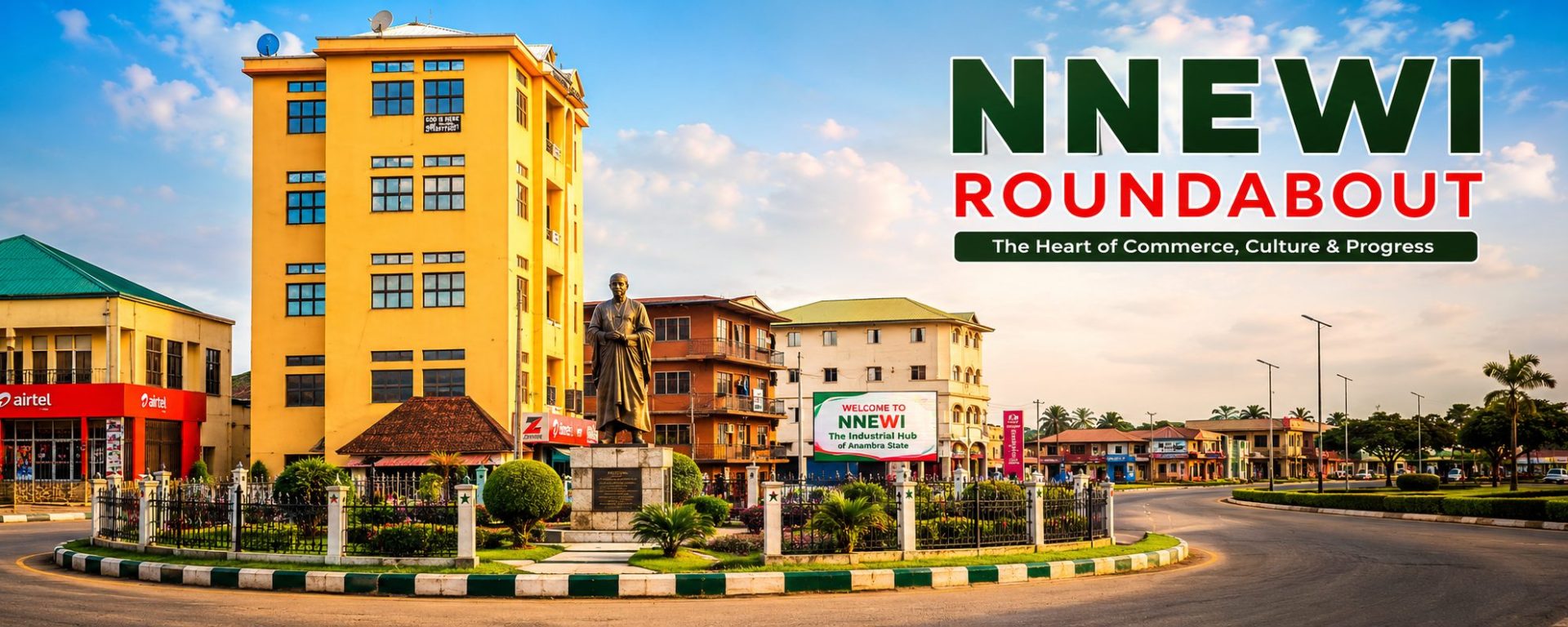
Nnewi eventually became the commercial and industrial capital of southeastern Nigeria and one of the leading manufacturing centres in West Africa.
The town is home to:
- Innoson Vehicle Manufacturing, Nigeria’s first indigenous automobile manufacturer.
- Coscharis Group, the exclusive distributor of BMW in Nigeria.
- Ibeto Group.
- Cutix PLC.
- ADSwitch.
- Capital Oil.
- Numerous transport companies, including Ekesons, Orizu Motors, Ekenedili Chukwu Motors, Amazu Motors and Ojukwu Transport.
These enterprises transformed Nnewi into one of the most entrepreneurial communities in Africa.
Conclusion
Anaedo is more than a geographical expression and certainly does not belong to Nnewi citizens alone. It represents a shared heritage rooted in common ancestry, cultural memory and centuries of interaction among related communities.
Whether viewed through the traditions surrounding Mmaku, Ikenga, Agbaja and Edo, the story of Anaedo remains one of kinship, migration, adaptation and unity. It is a history that deserves to be preserved and transmitted to future generations.
Author

Views: 61
Thank you sir for this wonderful piece