
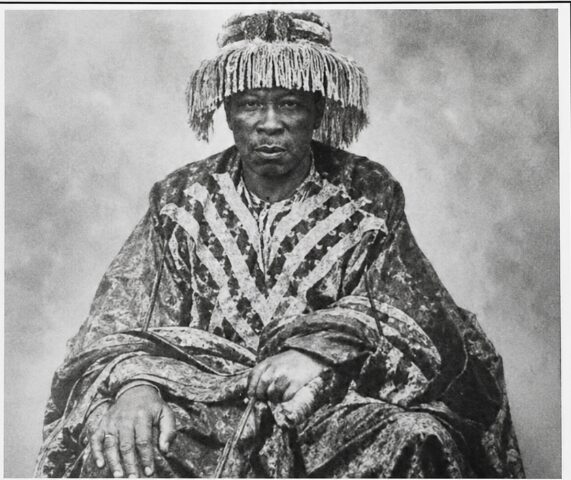
The Nnewi Monarchy is one of the oldest and most respected traditional institutions in Igboland. Rooted in centuries of indigenous governance, spiritual authority, and hereditary succession, it represents a unique blend of kingship, communal leadership, ancestral reverence, and constitutional traditional administration.
Unlike many traditional systems where rulers are selected, elected, or rotated among royal families, the Nnewi monarchy is fundamentally hereditary. The throne is passed through the principle of primogeniture, whereby succession follows the direct male line of descent within the royal lineage. In Nnewi tradition, the monarch is born to the throne rather than chosen for it, and the institution remains one of the most enduring hereditary monarchies in southeastern Nigeria.
The traditional ruler of Nnewi is known as the Igwe, a title that signifies supreme traditional authority and spiritual leadership within the Nnewi Kingdom.
Origins of the Nnewi Kingdom
The origins of Nnewi Kingdom are traditionally traced to Mmaku, regarded as the founding ancestor and progenitor of the Nnewi people.
Historical traditions place the formation of the Nnewi Kingdom around the late fifteenth century, with the establishment of organized settlement patterns that later evolved into the modern communities of:
- Otolo
- Uruagu
- Umudim
- Nnewichi
Over time, these communities developed into autonomous political units while maintaining a common ancestry and shared cultural identity.
From this foundation emerged one of the most stable indigenous political systems in Igboland.
The Unique Tetrarchical System of Nnewi
One of the most distinctive features of Nnewi’s traditional administration is its Tetrarchical System, a political arrangement based on four autonomous communities.
Each of the four quarters possesses its own traditional ruler known as an Obi:
- Obi of Otolo
- Obi of Uruagu
- Obi of Umudim
- Obi of Nnewichi
Each Obi exercises authority within his own community and has jurisdiction over traditional matters affecting his people.
However, while all four Obis are autonomous within their respective communities, the Obi of Otolo occupies a unique position as the senior-most traditional ruler and consequently serves as the Igwe of Nnewi Kingdom.
The Igwe therefore functions as:
- Isi Obi (Head of the Obis)
- Custodian of Nnewi traditions
- Symbol of unity for all Nnewi communities
- Chief ritual authority
- Holder of the sacred Ofo of Nnewi
This system has enabled Nnewi to maintain unity while preserving the autonomy and identity of its constituent communities.
Meaning and Significance of the Title “Igwe”
The word Igwe is widely used among northern Igbo-speaking communities and is commonly translated as “King” or “His Royal Highness.”
The term is deeply symbolic and is associated with the heavens, majesty, divine authority, and elevated spiritual status.
Within traditional cosmology, the Igwe occupies a sacred position as the intermediary between:
- The ancestors
- The living community
- Future generations
The office combines political leadership, ritual responsibility, cultural preservation, and ancestral representation.
The Igwe serves not merely as a ruler but as the guardian of the collective spiritual heritage of Nnewi.
Hereditary Succession and Primogeniture
The Nnewi monarchy operates through a strict hereditary succession system.
The throne is neither elective nor transferable.
Succession is determined by:
- Patrilineal descent
- Birthright
- Primogeniture
The eldest surviving son traditionally succeeds his father.
Where a ruler dies without a direct male heir, succession may pass to the next eligible male within the royal lineage according to established customary law.
The hereditary nature of the institution has historically minimized disputes over succession and contributed significantly to political stability within Nnewi.
This tradition has ensured continuity of leadership for centuries and remains one of the defining characteristics of the Nnewi monarchy.
The Nnofo Royal Dynasty
The royal house of Nnewi is the Nnofo Dynasty of Otolo Nnewi.
For centuries, the Nnofo lineage has produced the traditional rulers of the kingdom and remains the recognized royal family from which the Igwe of Nnewi is selected through hereditary succession.
The dynasty traces its origins to the early rulers of the kingdom and has maintained continuity through successive generations.
The Current Monarch
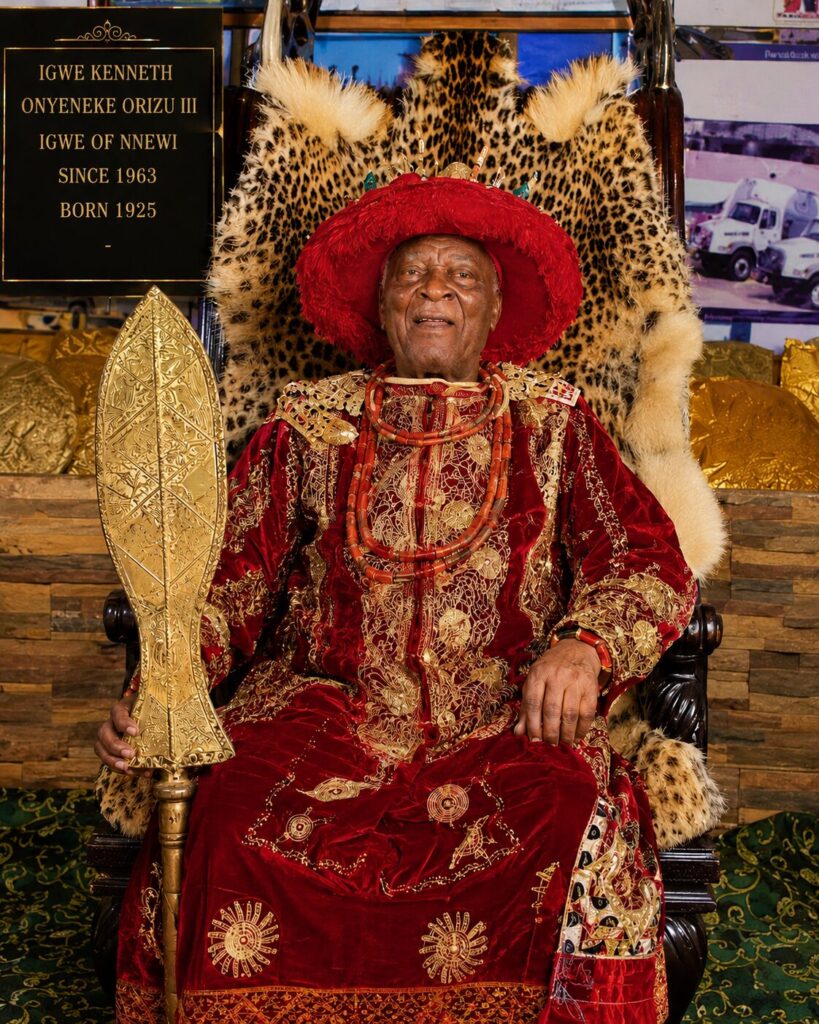
His Royal Highness Igwe Kenneth Onyeneke Orizu III
The present monarch of Nnewi is:
His Royal Highness Igwe Dr. Kenneth Onyeneke Orizu III (CFR)
He is the twentieth monarch of Nnewi Kingdom and the twentieth ruler within the Nnofo Royal Dynasty.
Igwe Orizu III ascended the throne in 1963 following the death of his father: His Royal Highness igwe josiah nnaji orizu iiIgwe Josiah Nnaji Orizu II
Born in 1925, Igwe Orizu III received his education at the prestigious Hope Waddell Training Institution in Calabar.
Before ascending the throne, he worked in journalism and business and established himself as a successful entrepreneur in Northern Nigeria.
His reign has become one of the longest and most influential in modern Nigerian traditional history.
Under his leadership, Nnewi has witnessed extraordinary growth in:
- Commerce
- Industry
- Education
- Infrastructure
- Cultural preservation
- International recognition
His reign coincided with Nnewi’s emergence as one of Africa’s leading indigenous industrial and commercial centers.
The Role of the Monarch
The constitutional role of the Igwe differs significantly from that of modern political leaders.
The Igwe does not exercise executive governmental authority over Anambra State or local government administration.
Instead, the monarch serves as:
Custodian of Tradition
Preserving customs, rituals, festivals, and cultural institutions.
Spiritual Leader
Overseeing traditional religious obligations and ancestral rites.
Symbol of Unity
Promoting harmony among the four communities of Nnewi.
Community Ambassador
Representing Nnewi in national and international engagements.
Custodian of Customary Law
Providing guidance on matters relating to tradition and customary practices.
The Igwe-in-Council
The traditional administration of Nnewi operates through the Igwe-in-Council.
This body consists of:
- Igwe Kenneth Onyeneke Orizu III (Otolo)
- Obi of Uruagu
- Obi of Umudim
- Obi of Nnewichi
The Council deliberates on:
- Traditional affairs
- Cultural matters
- Community disputes
- Inter-community relations
- Festivals and ceremonies
- Preservation of customs
Through consensus and consultation, the Council helps maintain unity among the four autonomous communities.
The Four Traditional Rulers of Nnewi
The traditional rulers of the four quarters are:

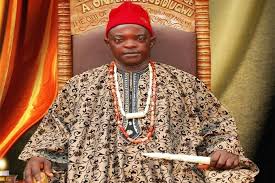

Together, these rulers constitute the highest traditional authority within Nnewi.
The Sacred Ofo of Nnewi
Central to Nnewi’s traditional authority is the sacred institution known as Ofo.
The Ofo is both a ritual object and a profound symbol representing:
- Truth
- Justice
- Authority
- Legitimacy
- Moral integrity
- Ancestral power
The holder of the Ofo is recognized as possessing the authority to invoke ancestral blessings and enforce communal values.
Within Nnewi tradition, the Igwe serves as the principal custodian of the highest Ofo institution.
The Ofo symbolizes the sacred covenant between:
- Chukwu (The Supreme God)
- The ancestors
- The living community
- Future generations
It remains one of the most important symbols of indigenous governance in Igboland.
The Ofo Shrine at Nkwo Nnewi
The Ofo institution is closely associated with the sacred Ofo shrine located within the Nkwo Nnewi area.
Historically, the shrine has served as:
- A center of ritual authority
- A place of oath-taking
- A venue for dispute resolution
- A symbol of communal unity
The shrine represents the continuity of ancestral traditions and remains an important component of Nnewi’s cultural heritage.
Chronology of the Monarchs of Nnewi
Traditional records preserve an unbroken succession of rulers dating back more than five centuries.
The twenty monarchs of Nnewi Kingdom are:
| Chronology | Otolo and Nnewi | DOB | Death | Reign | Uruagu | Umu Dim | Nnewichi |
|---|---|---|---|---|---|---|---|
| 1st | Chief Mmaku | 1477 | 1529 | 1498-1529 | |||
| 2nd | Chief Ikenga | 1503 | 1577 | 1529-1577 | |||
| 3rd | Chief Nnewi | 1530 | 1607 | 1577-1607 | |||
| 4th | Chief Okpala | 1560 | 1629 | 1607-1608 | |||
| 5th | Chief Digbo | 1563 | 1635 | 1608-1631 | |||
| 6th | Chief Otolo | 1566 | 1639 | 1631-1639 | |||
| 7th | Chief Enem | 1598 | 1675 | 1639-1651 | |||
| 8th | Chief Nnofo | 1600 | 1685 | 1651-1685 | |||
| 9th | Chief Udude (Eze Onolu) | 1625 | 1710 | 1685-1710 | Eze Afuogu | Dim Agu | Mkpidike |
| 10th | Eze Agha (Onuo Ora) | 1650 | 1745 | 1710-1745 | Eze Em | Eze Ocha | Obia |
| 11th | Eze Agha Jnr | 1685 | 1763 | 1745-1747 | |||
| 12th | Eze Nnwa | 1701 | 1791 | 1747-1791 | Eze Nwanagum | Dim Taba | Ota |
| 13th | Eze Oguine | 1740 | 1831 | 1791-1831 | Ume Agbu to Dikeafuna | Eze Kwasialu | Eze Oboo |
| 14th | Eze Chukwu | 1769 | 1840 | 1831-1840 | Eze Onalu | Dim Onyedike | Eze Ubi |
| 15th | Eze Ukwu | 1799 | 1862 | 1840-1862 | Ume Onyilora | Dim Ogeli | Dim Akum |
| 16th | Igwe Okafo | 1830 | 1891 | 1862-1891 | Eze Orimmili | Eze Umoka | Eze Nnwa |
| 17th | Eze ifekaibeya Igwe Iwuchukwu | 1855 | 1904 | 1891-1904 | Okonkwo | Eze Igbo | Eze Yim |
| 18th | Eze Ugbonyamba , HRH Igwe Orizu I | 1881 | 1924 | 1904-1924 | Obiagbawasim (Ume Aghaukwu) | Okafor (Eze Anyanighu) | Eze Orumba |
| 19th | Chief Josiah Nnaji, HRH Igwe Orizu II, Obi of Nnewi | 1903 | 1963 | 1924-1962 | Eze Ogidi | Eze Amaukwu Okafo | Eze oduma |
| 20th | Chief Kenneth Onyeneke, HRH Igwe Orizu III*** | 1925 | Living | 1963 | Daniel Udefuna Akabogu to Nnamdi Obi | Zepheniah Okafo | Joseph |
This remarkable continuity represents one of the longest documented hereditary royal traditions in southeastern Nigeria.
Legacy of the Nnewi Monarchy
For over five centuries, the Nnewi monarchy has remained a powerful institution of cultural identity, social cohesion, and traditional governance. Through wars, colonialism, political transformations, industrialization, and globalization, the institution has preserved the customs and values of the Nnewi people.
Today, the monarchy continues to serve as a symbol of continuity between the past, present, and future, embodying the traditions, authority, and collective aspirations of one of the most influential communities in Igboland.
References & Bibliography
Dr. John Okonkwo Alutu, Nnewi History (from the Earliest times to 1980/82),Fourth Dimension publishers
Associate professor of anthropology, Frank and Marshall College, Pennsylvania. 4 December 2002. Correspondence.
_____. 30 November 2002. Correspondence.
Norfolk State University (NSU). August 1999. “Lois E. Woods Museum: Nigerian Research.” http://www.nsu.edu/resources/woods/nigeria.htm [Accessed 29 Nov. 2002]
Views: 129